

ISO 27001 Internal Auditor Training is to develop competent internal auditors who can evaluate the effectiveness of an ISMS.
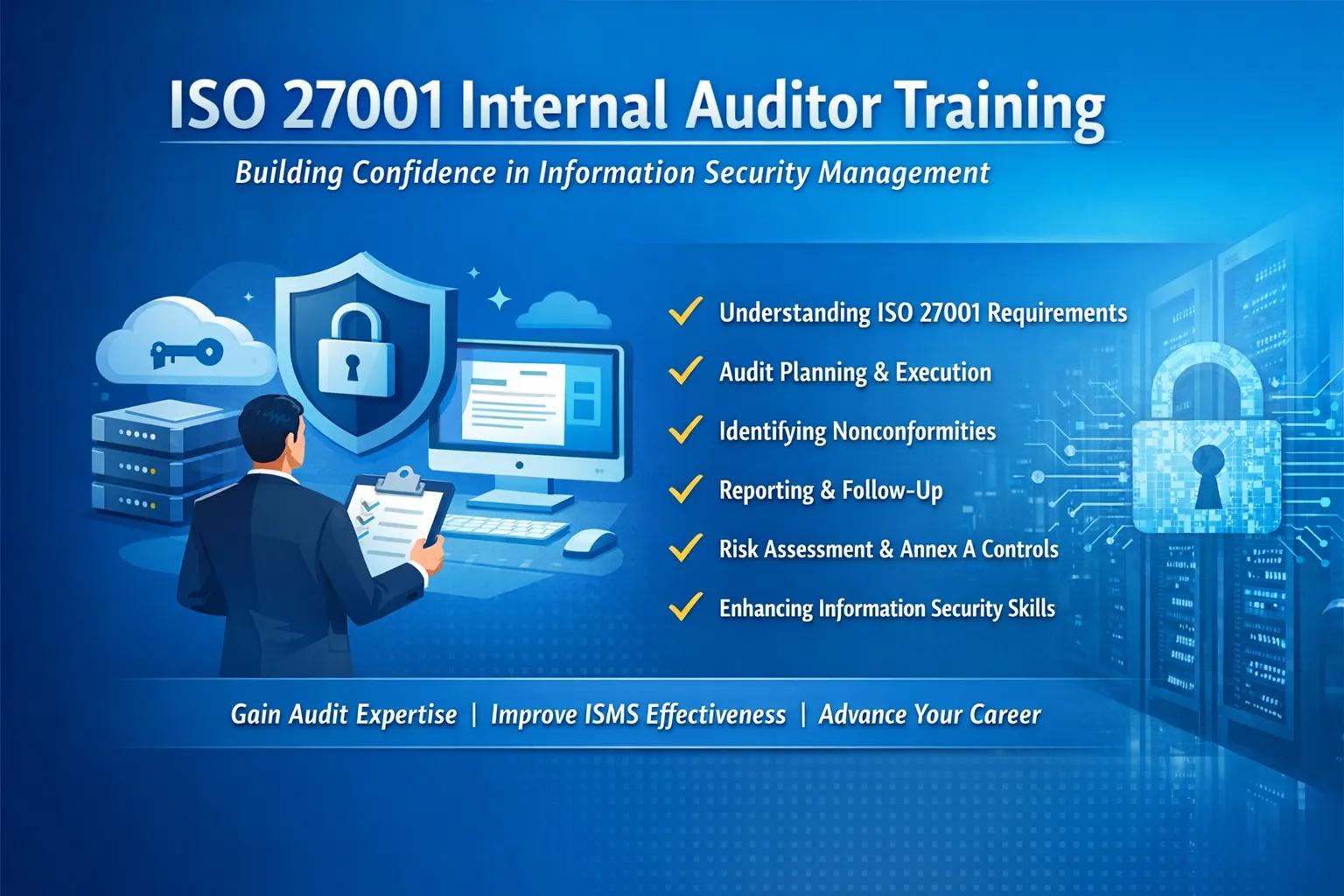
ISO 27001 Internal Auditor Training: Building Confidence in Information Security Management
Introduction to ISO 27001 and Internal Auditing
ISO/IEC 27001 is the internationally recognized standard for establishing, implementing, maintaining, and continually improving an Information Security Management System (ISMS). In an era where data breaches, cyber threats, and regulatory pressures are constantly increasing, organizations rely on ISO 27001 to protect sensitive information and maintain stakeholder trust. Internal auditing plays a critical role in this framework by ensuring that information security controls are effectively implemented and aligned with the standard’s requirements. ISO 27001 Internal Auditor Training equips professionals with the knowledge and skills needed to assess, monitor, and improve an organization’s ISMS through systematic and independent audits.
Purpose of ISO 27001 Internal Auditor Training
The primary purpose of ISO 27001 Internal Auditor Training is to develop competent internal auditors who can evaluate the effectiveness of an ISMS. This training helps participants understand the structure and clauses of ISO 27001, including risk assessment, risk treatment, and the Annex A controls. It also focuses on audit principles, audit planning, evidence collection, and reporting. By the end of the training, participants are able to identify nonconformities, recognize areas for improvement, and support management in achieving continual improvement of information security practices.
Key Concepts Covered in the Training
ISO 27001 Internal Auditor Training covers a range of essential concepts that form the foundation of effective auditing. Participants learn about the context of the organization, leadership responsibilities, planning, operational controls, performance evaluation, and improvement requirements as defined by the standard. Special attention is given to information security risk management, including how risks are identified, analyzed, evaluated, and treated. The training also explains how Annex A controls are selected and implemented, ensuring auditors can verify whether controls are appropriate and effective for the organization’s specific risks.
Audit Planning and Execution Skills
A major component of the training is developing practical audit skills. Participants learn how to plan an internal audit program based on organizational priorities and risk levels. This includes defining audit objectives, scope, and criteria, as well as preparing audit checklists and schedules. During the execution phase, trainees are taught how to conduct opening meetings, interview personnel, review documented information, and collect objective evidence. Emphasis is placed on professional communication, critical thinking, and maintaining objectivity throughout the audit process.
Identifying Nonconformities and Reporting Results
An effective internal auditor must be able to identify nonconformities accurately and report findings clearly. ISO 27001 Internal Auditor Training provides guidance on classifying audit findings, distinguishing between major and minor nonconformities, and identifying opportunities for improvement. Participants learn how to write concise, factual, and value-adding audit reports that management can easily understand and act upon. The training also explains the importance of follow-up audits and corrective actions to ensure that identified issues are properly addressed and do not recur.
Benefits for Individuals and Organizations
For individuals, ISO 27001 Internal Auditor Training enhances professional credibility and career prospects in the fields of information security, compliance, and risk management. It builds confidence in conducting audits and interacting with senior management on information security matters. For organizations, having trained internal auditors ensures regular and effective monitoring of the ISMS, early identification of weaknesses, and improved compliance with legal, regulatory, and contractual requirements. This ultimately strengthens the organization’s overall security posture and resilience.
Conclusion
ISO 27001 Internal Auditor Training is a vital investment for organizations committed to protecting information assets and achieving continual improvement in information security. By developing skilled internal auditors, organizations can ensure that their ISMS remains effective, compliant, and aligned with business objectives. The training not only supports successful ISO 27001 certification and maintenance but also fosters a strong culture of information security awareness and accountability across the organization.